Most common problems with garage roller doors come down to the same handful of faults: noisy operation, a door stuck or jammed in its guides, broken springs, opener and remote control issues, safety sensors that make the door reverse, and wear from the weather. Commercial roller doors suffer the same list, only faster, because they cycle far more often.
Some fixes are simple enough to handle yourself in ten minutes. Others involve springs under enormous tension and are extremely dangerous to touch. Knowing which is which saves money, downtime and, occasionally, fingers.
At Glide Roller Doors, our after-hours crew attends broken garage door call-outs across Perth, and most faults are sorted on the first visit from fully stocked vans. Here is what we see most often, what causes it, and practical troubleshooting tips for each problem.
Quick Troubleshooting Guide For Roller Door Problems
Use this table to match what you are seeing to its likely cause, then read the section below for the detail. Anything involving springs, cables or a door off its track belongs with a professional.
| Problem | Likely Cause | DIY Check Or Call A Professional? |
|---|---|---|
| Noisy operation | Dry guides, loose hardware or worn rollers | Clean, lubricate and tighten; call if grinding continues |
| Door stuck or jammed | Debris in the guides or a telescoping curtain | Clear the guides; call if the curtain has shifted |
| Door opens unevenly | Telescoping curtain or a tired spring | Call a professional |
| Door off track | Impact damage or bent metal tracks | Call a professional |
| Door too heavy to lift | Broken or weak springs | Call a professional |
| Remote not working | Dead batteries, interference or lost programming | Replace remote batteries and reprogram |
| Door reverses before closing | Dirty or misaligned safety sensors | Clean and realign the sensors |
| Motor runs but door stays put | Manual release engaged or a disengaged trolley | Re-engage the drive; call if it will not catch |
| Rust or leaks | Salt air, age or a failed weather seal | Wash the door; replace seals |
Noisy Operation And Unusual Noises
Unusual noises are the most common complaint, and usually the first warning. Squeaking and grinding normally mean dry guides or bearings, while rattling points to loose hardware such as bolts in the track brackets. Worn rollers on sectional doors, or a damaged roller bearing on a roller door’s drum, cause loud noises that get worse each week. On busy industrial roller doors, running strips and bearings simply wear out faster than on a home garage door.
For roller doors, clean the guides and apply a silicone-based spray for smooth operation rather than grease or oil, which attract dirt and turn into grinding paste. Tighten any loose bolts you can reach safely. If the noise continues, or you hear strange noises such as clunking from the drum, book a professional inspection before a worn part fails.
One noise needs immediate attention: a single loud bang from the garage, often with nobody near the door. That is usually a spring letting go, and it is covered below.
Door Stuck, Jammed Or Off Track
A door stuck halfway is usually caused by dirt, leaves or sand building up in the side guides. On the busy industrial estates around Wangara and Malaga, grit from trucks and forklifts fills guides far faster than on a suburban garage. Roller doors can also jam through telescoping, where the door curtain drifts sideways as it rolls and binds against one guide, which is why a door that opens unevenly needs attention. On sectional doors, obstructions in the garage door tracks or a bent section of metal tracks will stop the rollers dead. A door that jams at the same spot every day usually has a bent guide or a damaged section of curtain at that height.
Start with a visual inspection. Clear anything in the door’s path, clean the guides and check that the tracks are properly aligned and the track brackets are tight. If the curtain has shifted, the door has come off track, or a guide is bent from a forklift or car strike, stop using it. Forcing a door that is off track can buckle the curtain and cause further damage.
Wind can pop a curtain out of its guides on exposed sites too. Windlock clips are the usual fix, and doors rated for wind pressure under AS/NZS 4505 hold their curtains in place far better. Bent guides and telescoped curtains are routine work for our commercial roller door repairs team, and most are fixed in a single visit.
Broken Or Weak Springs
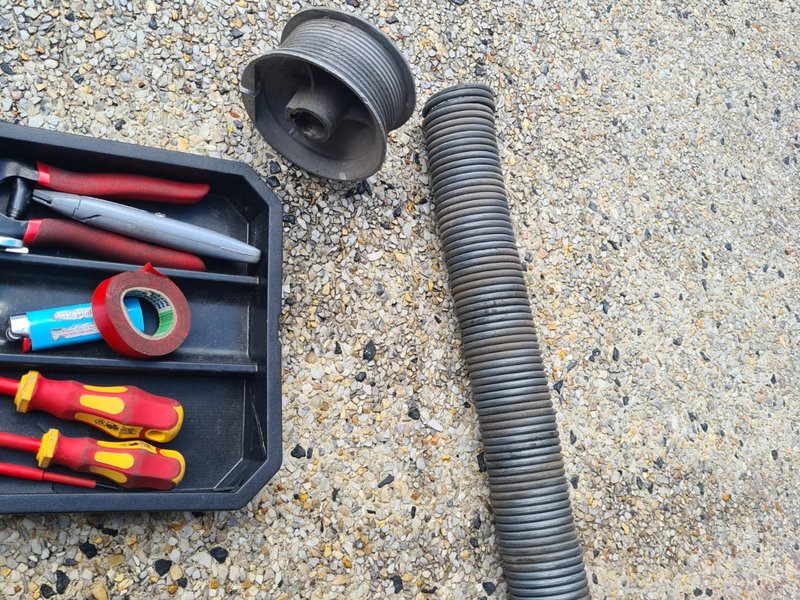
Springs do the heavy lifting. A roller door’s torsion springs sit inside the drum and balance the door’s weight, while sectional doors use torsion springs above the opening or extension springs along the tracks. When one breaks, the door suddenly feels too heavy to lift manually, or the motor strains and stops.
Weak garage door springs give warnings first: a door that creeps down when left halfway open, a sign the door’s balance is off, or a door that drops faster than normal. A broken spring often announces itself with a loud bang. On commercial sectional doors, snapped lift cables can let the door free-fall, which is a serious safety hazard for anyone underneath. Springs on busy commercial doors wear out sooner simply because they cycle so often. Spring steel fatigues rather than wearing gradually, a bit like a paperclip bent back and forth until it suddenly snaps.
Replacing springs is never a DIY job. They store enough energy to cause serious injury, and adjusting spring tension without winding bars is how fingers and wrists get broken. Spring replacement is quick work for a professional garage door technician with the right tools, and our vans carry common springs.
Opener, Remote And Wall Switch Faults
When the door will not respond, start with the simplest fix. Garage door remote problems usually come down to dead batteries, and many remotes have no battery indicator, so replace remote batteries first. Signal interference from nearby equipment, or a remote that has lost its programming, can cause the same symptoms, and reprogramming often solves it. If only one remote fails, it is almost always the battery; if every remote stops at once, look at the receiver, the power or interference instead.
If the wall switch or wall button does nothing either, check the power supply to the motor unit, including any isolator switch on commercial sites, and look for damaged wiring, which needs a licensed electrician or technician. If the motor hums but the door stays put, the manual release may be engaged. On roller doors, the manual release cord or lever needs to be reset to re-engage the drive; on sectional doors, a disengaged trolley on the rail has the same effect.
After a blackout, a door with battery backup should keep working, but older openers may need resetting. If the door starts and stops at random, or the garage door opener strains and overheats, the motor may be past its best. We match garage door openers and motors to each door’s weight, because an undersized unit fails early.
Safety Sensors And A Door That Reverses
If the door reverses just before closing, or keeps suddenly reversing for no clear reason, the safety sensors are the usual suspect. These photo-eye beams sit either side of the opening and stop the door when something breaks the beam. Dirt, spider webs, low morning sun or a knock that leaves them misaligned will all trigger the auto-reverse function.
Wipe both lenses with a soft cloth, clear anything in the door’s path and check the indicator lights. Misaligned sensors can usually be nudged back into line by hand. On warehousing and logistics sites, pallets and trolleys bump sensors out of line constantly, so fitting a steel guard around each one saves repeat call-outs.
Never bypass them. Auto-reverse is the most important piece of garage door safety on the whole door, and a door that closes on a person or vehicle can do real damage.
Weather Damage, Rust And Worn Seals
Perth is tough on doors. Salt air near the coast corrodes curtains, fixings and bottom rails, limestone dust and beach sand clog the guides, and summer UV cracks rubber seals. A perished weather seal lets in dust, rain and pests, and gaps under the door are a security risk as well as a mess. In a heatwave, a motor on a west-facing wall can also trip its thermal cut-out and stop until it cools.
Wash the door every few months with mild soapy water, more often near the coast in suburbs like Scarborough, Henderson or Rockingham, and treat surface rust before it spreads. Replace cracked seals promptly. A damaged garage door curtain or badly rusted bottom rail can weaken the whole garage door system, so ask for a repair-or-replace opinion if corrosion has reached the structure.
What You Can Safely Check Yourself
Many garage door issues can be diagnosed, and some fixed, without tools or risk. These DIY repairs and checks are safe on most doors, from a roller garage door at home to a warehouse door:
- Replace remote batteries and try the wall switch
- Make sure the manual release is engaged and the power is on
- Wipe the safety sensors with a soft cloth and check their alignment
- Clear debris from the guides and the floor under the door
- Wash the curtain and lubricate the guides with silicone spray
- Run a visual inspection for rust, loose hardware and frayed cables
Anything beyond that, especially springs, cables, track brackets or electrical work, is not a DIY job. Critical components on a roller door are under load even when the door is closed, and worn-out parts can fail the moment you touch them.
When To Call A Professional
Call a professional straight away if the door is off track, a spring or cable has broken, the door will not close and leaves your premises open overnight, or you hear grinding from the drum. A door that will not lock leaves stock and equipment exposed, and a door hanging at an angle can drop without warning.
Our 24/7 team handles emergency roller door repairs across Perth. Getting professional help early is almost always cheaper than letting a small fault turn into a door that will not open at all, and our technicians will tell you honestly whether a repair or a new roller door installation makes more sense.
How Regular Maintenance Prevents Most Problems
Most of the faults above start small and grow quietly. Regular maintenance catches them early: lubricate the guides and moving parts every few months, run a quick visual inspection monthly, and book a professional service at least once a year, or every three to six months for busy commercial doors. In Perth’s dusty, salty conditions, some sites benefit from six-monthly visits even with light use.
A proper service covers spring tension, the door’s balance, bearings, seals, the opener and the safety sensors, and helps the motor lift the door smoothly. It costs far less than an emergency call-out and adds years to the door’s life. Our scheduled servicing plans work around your trading hours, and keeping a simple log of any faults between visits helps our technicians spot patterns early.
Frequently Asked Questions
Quick answers to the common garage door issues we are asked about most.
Why Is My Roller Door So Noisy?
Usually dry guides, loose hardware or worn bearings. Clean the guides, apply a silicone spray and tighten what you can reach safely. If the noise persists, book a professional inspection.
Why Won’t My Roller Door Close All The Way?
Check for obstructions and dirty or misaligned sensors first. If the door still stops or reverses, the travel limits or the springs may need adjusting by a technician.
Why Does My Roller Door Go Up Unevenly?
One side rising faster usually means the curtain is telescoping on the drum or a spring is tired. Stop using the door and have it checked, because it can jam or come off track.
Can I Replace Roller Door Springs Myself?
No. Springs are under extreme tension and can cause serious injury. Replacing springs needs proper winding tools and training, so leave it to a qualified technician.
What Should I Do If My Door Is Stuck Open?
Check the remote, wall button and power first, then whether the manual release is engaged. If the door still will not close, call us, because an open door overnight puts your property at risk.
Is It Safe To Use A Roller Door With A Broken Spring?
No. The door can drop suddenly, and the opener can burn out trying to lift it. Leave the door where it is, keep people clear and call a technician.
How Often Should A Roller Door Be Serviced?
At least once a year for a home or light commercial door, and every three to six months for busy commercial doors.
Fix Small Problems Before They Get Expensive
Most common garage door problems follow a pattern: noise first, then stiffness, then failure. Catch them at the noise stage and the fix is usually quick and cheap. Leave them, and a simple clean and lube becomes a broken spring, a buckled curtain or a door that will not open on the busiest day of the week.
If your garage roller door or commercial roller door is showing any of these signs, have a professional garage door technician from Glide Roller Doors look at it before it gets worse. Book a roller door repair or service online, or call (08) 7813 3665 and we will come back within one business day, or straight away for emergencies.

Tyler started Glide Roller Doors with one van and a phone, and he still quotes the bigger commercial jobs himself. He's worked with commercial and garage doors for more than 15 years.