Commercial roller door compliance in Australia comes down to four things: the door must stand up to the wind loads for its site, protect the people working around it, be wired to the Australian Wiring Rules if it is powered, and meet any fire or bushfire provisions that apply to the building. The National Construction Code sets the framework, and a handful of Australian Standards fill in the detail.
Compliance is not paperwork for its own sake. A non-compliant door is how a forklift driver ends up pinned, a curtain ends up in the car park after a storm, or an insurance claim ends up refused.
At Glide Roller Doors, our licensed technicians test, document and tag every safety device on the commercial doors we service across Perth. This guide explains the rules that apply, how to check your door against them, and what compliance typically costs.
What Commercial Roller Door Compliance Covers
Compliance is not one certificate. It is a set of overlapping requirements, and which ones apply depends on the door type, the building, and who uses the opening. The table below summarises the main areas for commercial doors in Western Australia.
| Area | What It Covers | Key Standard Or Law |
|---|---|---|
| Structural and wind | Door, guides and fixings resist the design wind pressure for the site | NCC, AS/NZS 1170.2, AS/NZS 4505 |
| Powered door safety | Safety sensors, auto-reverse and manual override | AS/NZS 60335.2.103, WHS Act 2020 (WA) |
| Electrical | Motor wiring, isolation and licensed work | AS/NZS 3000 (Wiring Rules) |
| Fire | Doors in fire-resisting walls | NCC, AS 1905.2 |
| Bushfire | Certain buildings in designated bushfire-prone areas | NCC, AS 3959 |
| Approvals and records | Building permits, certificates and service logs | Building Regulations 2012 (WA) |
Several parties share these duties. Your installer carries responsibility for the specification and installation, but under WA’s WHS laws the business in control of the site keeps its own duty to keep the door safe, and that duty cannot be contracted out.
Structural And Wind Compliance
Every commercial roller door must resist the wind loads for its location. The NCC references AS/NZS 1170.2 to set wind regions, and AS/NZS 4505 covers how garage doors and other large access doors are designed, rated and installed to meet them.
Perth sits in non-cyclonic Region A, while the coast from Carnarvon to Port Hedland falls in cyclonic Region D. A door rated for a Welshpool warehouse is not suitable for a Pilbara workshop. Cyclone-rated doors use heavier curtains or panels, reinforced guides and tracks, and wind locks along the curtain, which can add $1,500 to $4,000 or more depending on door size.
Even within Perth, the design wind speed varies with terrain, height and shielding. A tall door on an exposed site near the coast, such as around Henderson or Rockingham, may need a higher rating than the same size of door tucked inside an industrial estate. Your installer should confirm the site’s wind classification before quoting, not after.
Wind compliance also depends on the frame and fixings. The door is only as strong as the structure it is anchored to, so guides must be fixed to members that can carry the load. When we specify industrial roller doors for new sheds, we check the opening framing as part of the job, because a rated curtain bolted to an undersized jamb will not perform.
Safety Requirements For Powered Doors
Powered doors create crushing and entrapment hazards, so safety devices are central to compliance. The relevant standard for the motors on many commercial garage doors is AS/NZS 60335.2.103, which covers electric drives for rolling doors, sectional overhead doors and gates, including the hazards created by the moving door itself.
Its scope turns on who uses the door. It applies where members of the public or untrained workers operate a door, such as in shops, offices, car parks and strata buildings. Drives used only by trained staff on industrial sites fall outside it, but that is not a loophole. Those doors still sit under WA’s work health and safety laws, which require a safe system of operation.
In practice, a compliant powered commercial door typically includes photoelectric safety beams across the opening, a safety edge on the bottom rail that reverses the door on contact, force limiting or obstacle detection in the motor, and a manual override for power failures and emergencies. Where a door opens onto a busy walkway, clear signage and a separate pedestrian entry reduce the risk further.
The Work Health and Safety Act 2020 (WA), in force since 31 March 2022, places the primary duty on the person conducting a business or undertaking. That duty extends to safe plant, structures and systems of work, so far as is reasonably practicable. A door with bypassed safety sensors or a manual override nobody knows how to use is the kind of risk a safety inspector would identify.
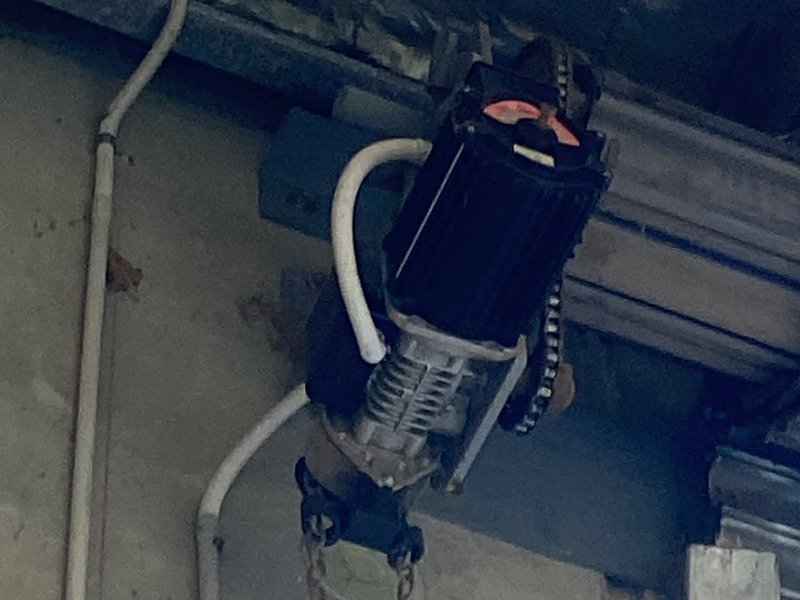
If a sensor keeps stopping the door closing, never let anyone bypass it. The fault is usually a dirty lens or a knocked bracket, both quick to fix. If your ageing commercial door motors and openers cannot support modern safety devices, replacing the opener is usually cheaper than carrying the risk.
Electrical Compliance
Any powered door must be wired in line with AS/NZS 3000, the Australian Wiring Rules, and in WA the electrical work must be done by a licensed electrician. That covers the power supply to the motor, isolation switches, and any links to fire panels or access control systems.
Large industrial motors often run on three-phase power, and a motor that is undersized for the door’s duty cycle overheats and trips. Ask for the electrical safety certificate once the job is finished and keep it with your door records. A tradesperson who plugs in a motor and leaves the fixed wiring to guesswork is creating a problem you will inherit.
Fire And Bushfire Requirements
If a roller door sits in a fire-resisting wall, such as between a warehouse and an adjoining tenancy, the opening must be protected, typically by a fire-rated shutter built to AS 1905.2. These shutters are tested to AS 1530.4, must carry a compliance label, and need routine inspection and maintenance to stay compliant. A standard steel curtain, however heavy, is not a fire door.
Fire shutters are specialist products with their own installation and certification rules, so check your installer is accredited for fire doors before work starts. After any tenancy fit-out, confirm a standard door has not been swapped in where a fire-rated one belongs.
Bushfire rules are narrower than many people assume. Under the NCC, bushfire construction requirements, including AS 3959, apply to homes, apartment and accommodation buildings, and certain Class 9 buildings such as schools and health-care facilities in designated bushfire-prone areas. Most warehouses, factories and shops are not caught by them, although planning approvals in the Perth hills and other bushfire-prone areas can still impose bushfire conditions.
If your site has a bushfire attack level assessment, give it to your installer. On mixed sites, doors on a house or its garage in a bushfire-prone area need gaps sealed against ember entry, and that detail changes the seals and accessories specified.
Permits, Approvals And Documentation
In WA, the Building Regulations 2012 exempt some repair and alteration work from needing a building permit, but only when it does not affect the structural soundness of the building, uses materials commonly used for the same purpose, and does not change how the building meets its building standards. A like-for-like door replacement in an existing opening often falls within that exemption.
Cutting a new opening, widening an existing one, or removing a supporting member is different. That work typically needs a permit through your local government before it starts. The decision rests with the permit authority, so check with your council’s building team or a registered building surveyor if you are unsure. Raise the permit question when you book commercial roller door installation, not on the day.
Paperwork is the key to proving compliance. Keep a file for each door with the product specification and wind rating, the installation date, the electrical safety certificate, and a service log recording every inspection, adjustment and repair. Ask for an itemised quote on any new door detailing the model, wind rating and safety devices, so you can check the specification against what is actually installed.
Every service visit we complete ends with a short written report, which builds your door’s compliance history over time. If a door ever features in an incident, a safety audit or an insurance claim, that history is the first thing anyone will ask to see.
Compliance For High-Speed And Cold Storage Doors
High-speed doors bring their own compliance questions because they run at high speed and cycle so often. Rapid doors typically open at 0.5 to 2.5 metres per second, and PVC rapid roll doors can complete 1,000 to 2,000 cycles a day. At that cycle speed, safety devices must react faster, so light curtains that scan the full opening are common in place of a single beam.
Duty cycle matters as much as speed. A motor rated for a few dozen cycles a day will overheat on a door that averages 500, and an overworked drive fails early and often. Always match the motor’s duty cycle to your real traffic, not the traffic you had when the door was first specified.
In cold storage, the door is part of the building envelope, and its thermal performance affects energy use every time it opens. Rapid doors cut the time an opening stands open, which limits the warm air that rushes in, while insulated roller doors reduce heat transfer through the curtain itself. Seals, guide covers and the bottom gap all need regular checks, because a door that no longer seals leaks cold air around the clock.
In industrial applications that handle chemicals or wash down daily, curtains, seals and hardware must be rated for that exposure, or corrosion can undo the specification within a few years. For busy warehousing and logistics sites, self-repairing curtains that re-engage automatically after a forklift strike keep the opening working without a call-out. A well-maintained rapid door typically lasts 8 to 12 years.
Maintenance And Ongoing Compliance
A door that was compliant on installation day does not stay compliant by itself. Springs lose tension, sensors drift out of alignment, and curtain guide seals wear progressively with use. Servicing at regular intervals is how you keep a door safe, and how you prove you have done so.
Annual safety checks are recommended for every motorised door, and busy commercial doors need more. Our roller door maintenance and servicing plans run quarterly for high-cycle and car park doors, every six months for most commercial sites, and annually for light use. Each visit tests the safety sensors and auto-reverse, checks springs, cables and seals, and makes any adjustment the door needs.
Many faults are small. Safety sensor faults are often just dirty lenses, and small tears in a PVC curtain can usually be patched. Other failures are bigger: a burnt-out motor may need complete replacement, and a door with failing springs, a damaged curtain and worn guides can reach the point where full replacement costs less than another round of roller door repairs.
Parts availability is the hidden compliance risk on older doors. If safety components for an obsolete opener are no longer made, the door may not be repairable to standard after a complete failure. Planning a staged replacement before that happens is far cheaper than an emergency swap with a loading dock out of action.
What Compliance Costs
Compliance costs are small next to the cost of an incident, but they are real, and an itemised quote is the only fair way to compare them. As a guide, fitting a motor to a new door typically costs $600 to $1,400, and the cyclone-rating premium outlined above applies on top of the door itself in cyclonic regions.
The bigger numbers come from neglect. A door with a failed safety system may need a new opener, sensors and wiring at once, which is a far higher cost than regular servicing would have been. When comparing quotes, look at the total cost over the door’s life, including service visits and parts, not just the supply price on day one.
Door choice affects compliance cost too. The roller door is the most common type on industrial sites because it is simple and robust, and most manufacturers offer a steel line in a wide range of sizes and wind ratings to suit different sites. A commercial sectional door costs more upfront but can deliver better insulation, which matters where temperature control or energy efficiency is part of the project.
How To Check Your Door Is Compliant
Use this checklist to identify gaps before an inspector, insurer or injury does. If you answer no to any item, book a compliance check.
- Wind rating: the door’s rating matches the wind region and site conditions, and a label or documentation proves it.
- Safety sensors: beams and safety edges stop and reverse the door before it contacts a person, vehicle or equipment, and nobody has bypassed them.
- Auto-reverse: the door reverses when it meets an obstruction while closing.
- Manual override: staff know how to operate the door safely during a power failure.
- Electrical: an electrical safety certificate is on file for the motor wiring.
- Fire rating: any door in a fire-resisting wall is a labelled fire shutter, inspected on schedule.
- Service records: a log shows servicing at regular intervals, with the last visit within the past year.
- Access and signage: pedestrians have a separate entry where vehicle and foot traffic share the opening.
Emergency faults, such as a sensor failure that leaves a door unable to close securely overnight, should go straight to our emergency roller door repairs team rather than waiting for the next service.
Frequently Asked Questions
These are the compliance questions Perth business owners and facility managers ask us most often.
Is AS/NZS 4505 Mandatory For Commercial Roller Doors?
AS/NZS 4505 is the Australian Standard for garage doors and other large access doors, covering design, installation and wind ratings. Whether it is formally required depends on your building approval, but it is the benchmark certifiers and engineers use, and reputable manufacturers test their doors to it.
Do Commercial Roller Doors Need Safety Sensors?
Powered doors used by the public or untrained staff fall under AS/NZS 60335.2.103, which deals with the hazards of the moving door, and WA’s WHS laws require safe operation on every site. In practice, safety sensors and auto-reverse are the standard way to meet both.
How Often Should A Commercial Door Be Inspected For Compliance?
At least once a year for any motorised door, and quarterly for high-cycle doors such as car park and loading dock doors. Fire shutters must also be inspected regularly and re-certified as operable, on a schedule agreed with the relevant authority.
Do I Need A Permit To Replace A Commercial Roller Door In Perth?
Often not, if it is a like-for-like replacement in the same opening that does not affect the structure. Cutting or widening an opening usually needs a building permit. The permit authority, usually your local government, makes the final call.
Who Is Responsible For Roller Door Compliance?
Under WA’s WHS laws, the business in control of the site carries the main duty to keep the door safe, and installers have their own duties for supplying and installing it correctly. Leases often split maintenance between owner and tenant, so check yours and agree in writing who books the servicing.
Keep Your Doors Compliant And Your Site Safe
Commercial roller door compliance is not a one-off box to tick. It starts with the right door for your wind region and use, continues with working safety devices and certified wiring, and depends on servicing and records for the life of the door. Get those pieces right and you protect your people, your stock and your business.
Glide Roller Doors inspects, services and installs commercial doors across Perth from our Welshpool base, and our licensed, insured technicians will show you exactly where your doors stand. Book a compliance inspection or request a quote online, or call (08) 7813 3665 to speak with our team today.

Tyler started Glide Roller Doors with one van and a phone, and he still quotes the bigger commercial jobs himself. He's worked with commercial and garage doors for more than 15 years.