There are more types of commercial doors than most buyers expect. Warehouses, workshops and loading bays usually choose between roller doors, sectional doors and high-speed doors, while shopfronts, offices and lobbies lean towards automatic sliding doors, swing doors and other glass entrances. Fire-rated and specialist doors cover compliance and controlled environments.
Pick the wrong one and you live with it daily, whether that is a roller door that makes a showroom feel like a shed or a glass entrance that cannot handle forklifts.
Our own crews have fitted and serviced commercial doors across Perth for more than 15 years. This overview explains how each type works, where it fits and what to ask before you buy.
Types Of Commercial Doors At A Glance
Each door type solves a different problem, and most commercial sites use more than one. Use this table to shortlist, then read on for the key features of each.
| Door Type | Best For | Key Strength | Watch Out For |
|---|---|---|---|
| Roller door | Warehouses, workshops and rural sheds | Compact drum saves ceiling space | Limited insulation unless upgraded |
| Sectional door | Showrooms and clean workshops | Insulated panels and a tight seal | Needs clear ceiling space for tracks |
| High-speed door | Busy docks and cold stores | Opens and closes in seconds | Higher upfront cost |
| Automatic sliding door | Lobbies, retail and medical entries | Natural light and easy accessibility | Needs wall space beside the opening |
| Swing, folding and revolving doors | Offices, hallways and tight entrances | Flexible layouts and style | More moving parts to maintain |
| Fire-rated and specialist doors | Fire walls, labs and studios | Compliance and controlled environments | Strict certification and inspection |
Commercial Roller Doors And Their Variations
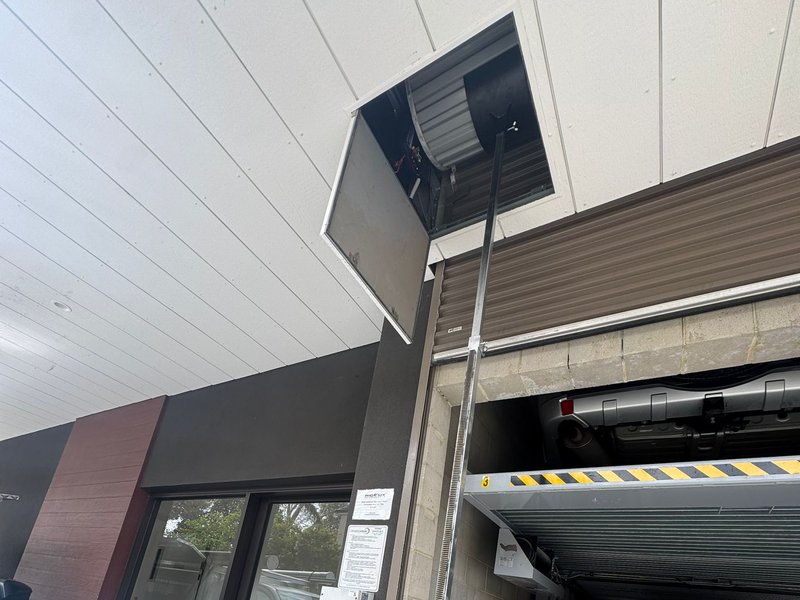
Walk any industrial estate from Wangara to Bibra Lake and roller doors outnumber everything else, and they are built far heavier than the doors on home garages. The curtain rolls into a compact drum above the opening, leaving walls and ceilings free, and the range comes in four main forms.
Standard Steel Roller Doors
The classic option: a corrugated steel curtain running in side guides. Standard industrial roller doors are durable, secure and usually the best value per square metre, and they handle a wider opening than most other door types. Most of the doors we fit on Welshpool and Kewdale warehouses fall into this group.
Insulated Roller Doors
Foam-filled slats replace the single steel sheet. Insulated roller doors keep heat out of cool rooms, food storage and workshops through a 40-degree Perth summer, cut heating and cooling costs, and bring some noise reduction for the neighbours. Staff notice the difference by mid-afternoon.
Security Roller Shutters
Security doors and shutters use interlocking slats and heavier gauges to turn a shopfront or service counter into a hardened barrier after hours. Perforated slats keep visibility and airflow for retail and strata car park openings, where a solid curtain would trap fumes.
High-Speed Roller Doors
Fabric or flexible curtains that cycle in seconds, built for busy docks, cold stores and food plants, like the distribution centres around Perth Airport, where every open second costs energy or lets dust in. High-speed doors cost more upfront but suit openings that cycle all day.
Commercial Sectional Doors
A sectional door is made of insulated panels joined by hinges, running up and back along ceiling tracks. The panels seal tightly, so commercial sectional doors suit showrooms, clean workshops and climate-controlled spaces where insulation and a tidy finish matter, such as the car showrooms around Osborne Park.
The trade-off is ceiling space: you need clear headroom for the tracks, and there are more moving parts, from rollers to cables, to maintain. Sectional overhead doors are a strong pick for buildings in hot climates like ours, as long as the roof structure can carry the tracks.
Automatic Sliding, Swing And Other Entrance Doors
For customer-facing commercial spaces, glass usually wins. Automatic sliding doors are the default in lobbies, shopping centres and medical centres because they handle heavy foot traffic, bring in natural light and give clear visibility from the street.
Motion sensors open them hands-free, which aids accessibility and can reduce wear on hardware compared with doors people push all day. Double-glazed panels and thermally broken frames cut heat transfer too, a real saving on an air-conditioned Perth shopfront in February.
Other types fill the gaps. Swing automatic doors open inward or outward on hinges and suit narrower entries and hallways. Folding doors stack hinged panels to the side when space is tight, and revolving doors create compartments that keep wind and dust out of busy lobbies. Curved automatic doors add style and make a dramatic entrance, lifting kerb appeal when your front door is part of your brand.
One honest note: we specialise in roller, sectional and high-speed doors, so for glass entrances, use an installer who works on automatic glass systems every day.
Fire-Rated And Specialist Doors
Some doors are there to protect occupants rather than let them in. Fire-rated doors hold back fire for a set period and help compartmentalise a building, so a fire in one area does not race through hallways and stairwells. In Australia, fire-resistant roller shutters are covered by AS 1905.2, which relies on prototype testing to AS 1530.4 and requires labelling.
One detail catches buyers out. Steel fire shutters stop flames but get extremely hot, so they usually carry no insulation rating, and the building code may not allow them where insulation is required. They also need regular inspection and recertification, and proper installation is critical.
Other specialist doors solve narrower problems. Acoustic doors dampen noise for studios, clinics and professional environments, and hermetically sealed doors create an air-tight seal for labs, cleanrooms and operating theatres.
Materials, Climate And Compliance In Perth
Materials decide a door’s durability. Steel brings strength and security, aluminium resists corrosion and keeps weight down, and fibreglass can stand up to wet or chemical environments. On coastal sites from Fremantle to Rockingham, corrosion-resistant materials and finishes add years of life, because salt air works on bare metal every day. A durable door also means fewer roller door repairs and replacements down the track.
Perth’s Mediterranean climate brings long, hot summers and wet, windy winters, so external doors need weather seals that keep the elements out, from heavy rain to strong winds, plus UV-stable finishes. Wind exposure matters on open estates like Kwinana, where a summer easterly can rattle a lightweight door in its guides before dawn. Sites in bushfire-prone areas, such as parts of the Perth hills, may need doors and seals built to bushfire requirements.
Compliance ties it together. The National Construction Code governs commercial doors, including emergency egress, and accessible entrances generally need an 850mm minimum clear opening under AS 1428.1.
Security And Access Control Features
Security features should scale with the risk to your premises. Most commercial doors can integrate with access control systems, so staff enter with card readers, fobs or keypads, and high-security sites add biometric scanning. Multi-point locking systems and tamper-proof handles make forced entry harder, and many automatic doors include burglary-prevention features such as locks that engage when the door closes. A shutter that looks tough but lifts with a pry bar is only decoration.
On roller and sectional doors, a motor with remote control and safety features such as auto-reverse sensors adds convenience without giving up protection. We match roller door motors and openers to the door’s weight and duty, because an undersized motor on a heavy door burns out early.
Installation And Maintenance
Even the best door fails if it is not installed correctly. A door frame that is out of square, a wall that cannot carry the load or a badly set spring will shorten its life, so use qualified installers who measure to the millimetre. Construction matters too: on the tilt-up concrete warehouses common in Perth’s newer estates, guides anchor straight into the panels, while older steel-framed sheds often need the jambs checked or reinforced first. Our own licensed technicians handle every roller door installation we quote.
Roller and sectional doors need a professional service every 3 to 12 months depending on use, while glass entries and motion sensors should be cleaned regularly, because high-traffic areas pick up grime fast and dirty sensors misread.
Busy food and medical sites need frequent cleaning on top of that. Scheduled servicing protects your moving parts, your warranty and the overall safety of everyone using the door.
How To Choose The Right Door For Your Building
Doors contribute to security, energy costs and first impressions at once, so start with your specific needs rather than a catalogue. Ask four questions: how many times a day will the door open, how big is the opening, what are you protecting, and what does the site throw at it? Different types suit different building types, and the answers usually narrow the field to one or two options.
A warehouse with forklifts needs a robust roller door, a showroom wants a sectional door or glass, and a lab may need a hermetic seal. There is rarely one perfect solution for a whole property, and many sites mix door types across their warehousing and logistics areas, offices and entries. A free site measure is the fastest way to an informed decision, and we would rather talk you out of the wrong door than sell it to you.
Frequently Asked Questions
Quick answers to what buyers ask us most.
What Are The Main Types Of Commercial Doors?
The main types are roller doors, sectional doors, high-speed doors, automatic sliding doors, swing and folding doors, and fire-rated or specialist doors. Industrial sites lean on the first three, while customer entrances favour glass.
Are Roller Doors Or Sectional Doors Better For Insulation?
Sectional doors generally insulate better because their panels seal tightly, but insulated roller doors narrow the gap and keep your ceiling space free.
Do Commercial Doors Need To Meet Australian Standards?
Yes. The National Construction Code sets the rules, and specific standards apply by door type, such as AS 1905.2 for fire-resistant roller shutters and AS 1428.1 for accessible doorways.
Can I Install A Roller Door In An Existing Opening?
Usually, yes. A roller door needs headroom above the opening for the drum and a little side room for the guides, and we confirm both at a free site measure before quoting.
Which Commercial Door Is Best For High-Traffic Areas?
For vehicles, a high-speed door. For pedestrians, automatic sliding doors. Both are built for constant cycling, and automation takes the strain off hinges, handles and staff.
Making The Final Call On Your Commercial Door
The different types of commercial doors each earn their place. Roller, sectional and high-speed doors keep warehouses and workshops secure and efficient, glass entrances welcome customers, and fire-rated and specialist doors keep buildings compliant. Match the door to the opening, the traffic and the conditions, and it will serve your business for years.
If a roller, sectional or high-speed door is on your shortlist, our team will measure the opening, check the headroom and power, and recommend the right door in plain English. Book a free commercial door measure and quote or call (08) 7813 3665, and we will come back within one business day.

Tyler started Glide Roller Doors with one van and a phone, and he still quotes the bigger commercial jobs himself. He's worked with commercial and garage doors for more than 15 years.