When weighing commercial vs industrial roller doors, the real difference is workload. A domestic roller door is built for a home garage and a few cycles a day. A commercial roller door handles moderate daily use on shops, workshops and strata car parks. An industrial roller door is heavy-duty, spans larger openings and is designed to withstand frequent use on warehouses and manufacturing sites.
Pick the wrong class and you pay for it, either upfront on a door you did not need or later in costly breakdowns. From our Welshpool base, our own crews fit all three across Perth, so here is how they compare in practice.
Commercial Vs Industrial Roller Doors: Key Differences At A Glance
The table below sums up how the three classes compare. Treat it as a guide, because the right door always comes down to your site’s specific requirements.
| Feature | Domestic | Commercial | Industrial |
|---|---|---|---|
| Typical use | Home garages and sheds | Shops, workshops and strata car parks | Warehouses, manufacturing plants and distribution hubs |
| Daily use | A few cycles | Moderate use | High-frequency, all-day operation |
| Opening size | Single and double garages | Up to around 5,100mm high | Larger spans than commercial doors |
| Construction | Lighter steel curtain | Heavier-gauge steel | Heavy-duty galvanised steel with wind locking |
| Security | Standard locks | Upgraded locks and access control | Advanced locking, alarms and CCTV |
Domestic Roller Doors: Built For Homes
Domestic roller doors are the garage doors on many Australian homes. Their lighter curtains roll up into a compact drum, suit single and double garages, and are built for a few trips a day.
Operation is manual or through roller door motors and remote controls, and electric models can integrate with smart home systems for extra convenience. Some homeowners add insulation to keep a garage or backyard shed cooler, but the steel, springs and motor are sized for light, occasional use.
Put one on a busy workshop and it wears out fast. It is a mistake we see often: the cheap door ends up costing more in repairs than the right one would have.
Commercial Roller Doors: Built For Business Premises
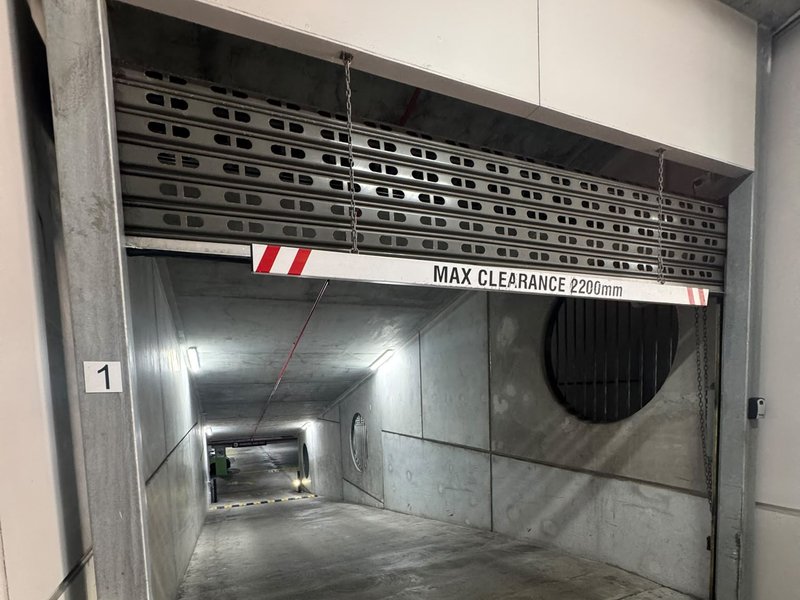
A commercial roller door steps up in size and strength for shops, workshops, offices and strata car parks. Commercial roller doors can accommodate openings up to 5,100mm high, use heavier-gauge steel, and are rated for moderate usage cycles, though they are not suited to high-frequency operations like a busy distribution dock.
Many businesses choose commercial roller shutters for shopfronts, where interlocking slats add security features and, when perforated, still let light and air through. A commercial garage door can be manual or motorised, and insulated roller doors help keep stock and employees comfortable through a Perth summer.
For most small and mid-sized premises, this class is the right balance of cost and durability.
Industrial Roller Doors: Built For Heavy-Duty Sites
Industrial roller doors are heavy-duty doors built for warehouses, manufacturing plants and distribution hubs, and they can span far larger openings than commercial doors. Thicker galvanised steel, heavier springs and reinforced guides let them handle dozens of cycles a shift without losing structural integrity.
Industrial doors offer superior wind protection and weather resistance, and wind-locking features are crucial in high winds, from exposed coastal estates to the cyclonic Pilbara. The right wind classification depends on your site’s exposure, so it should be assessed, not guessed. Weather seals along the bottom rail and guides keep out dust, rain and pests.
If you run a busy dock, our warehouse roller doors are specified for that daily grind, and they are far less likely to leave a truck waiting outside.
Security, Safety And Australian Standards
Security needs rise with each class. Industrial roller shutters provide robust physical access control, with advanced locking mechanisms to prevent unauthorised access and integration with alarms and CCTV systems. For warehouses protecting valuable inventory, that is often critical to a business’s security.
Safety matters just as much. Automated doors include safety features such as obstacle detection, and AS/NZS 4505, the standard for garage doors and other large access doors, sets requirements for design, installation, wind ratings and locking devices. It even rates domestic and general purpose doors separately. Compliance keeps you on the right side of safety regulations, and regular inspections confirm full functionality.
Maintenance, Durability And Long-Term Cost
Every class needs care, but the gap in running costs is real. Roller doors have fewer moving parts than commercial sectional doors, which rely on hinges, rollers and ceiling tracks, yet springs, locks and guides still wear. An annual service by a technician is essential for keeping any door in top condition, and busy industrial doors often need more.
Routine checks prevent costly repairs, and scheduled roller door servicing that allows for salt air, dust and heat catches problems early. A maintenance plan adds to long-term cost, but it is cheaper than a jammed door on a Monday morning.
How To Choose The Right Roller Door
The key factors are duty cycle, opening size and security requirements. Count how many times the door will operate each day, measure the opening and the room around it, and list what you are securing, from equipment to stock.
For example, factories and manufacturing sites running two shifts usually need an industrial door, while a café with a single shopfront shutter does not. Every facility has unique needs, and our recent post on commercial roller door sizes explains how much space a door needs around the opening.
We fit the full range, measure every opening to the millimetre before recommending a class, and the same crew handles your roller door installation.
Frequently Asked Questions
A few quick answers before you decide.
Can I Use A Domestic Roller Door On A Commercial Building?
It is rarely a good idea. A domestic door is not built to withstand frequent use or meet commercial security needs, and your building approval may call for a higher wind rating.
What Is The Difference Between Manual And Electric Roller Shutters?
Manual roller shutters require physical operation without a motor, while electric shutters operate by remote controls or smart systems. Motorised doors add convenience and safety features like obstacle detection, which suits busier sites.
Are Industrial Roller Doors More Expensive?
Yes, because they use heavier materials, bigger motors and more complex installation. On a high-use site, though, their durability usually makes them cheaper to own than a lighter door that keeps breaking down.
Final Thoughts On Choosing Your Roller Door
Domestic doors suit homes, commercial doors suit moderate business use, and industrial doors are built for heavy-duty sites where efficiency and uptime are vital. Match the door to the workload and it will protect your premises for years.
Not sure which class fits? Get a free roller door quote or contact our friendly team on (08) 7813 3665. We have installed more than 5,000 doors across Perth, back every one with after-sales support, and will give you a straight answer within one business day.

Tyler started Glide Roller Doors with one van and a phone, and he still quotes the bigger commercial jobs himself. He's worked with commercial and garage doors for more than 15 years.